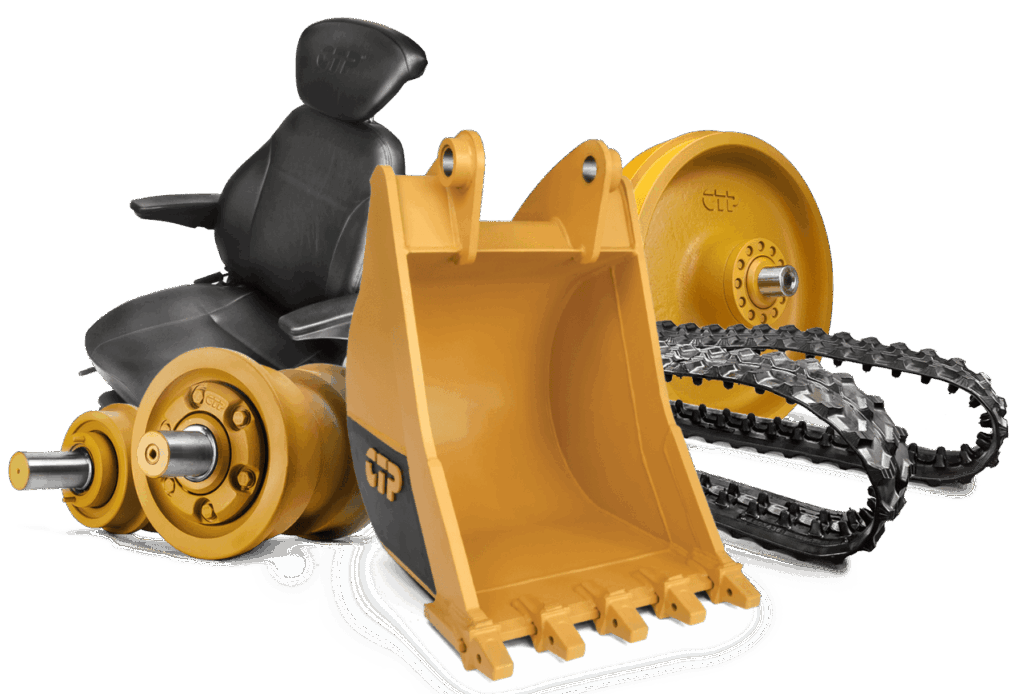
When companies across Latin America need to keep bulldozers, rollers, compactors, loaders, and tractors working without costly interruptions, sourcing the right replacement parts becomes far more than a routine purchase. A machine that stops in the middle of a paving contract, a mining operation, or a land development project can trigger delays, labor losses, and serious pressure on productivity, which is why Miami has become such an important commercial bridge for this industry. The city combines cargo infrastructure, export experience, multilingual communication, and a dense concentration of suppliers focused on construction and agricultural machinery, making it one of the strongest distribution points for buyers who need speed, accuracy, and consistent follow through.
In practical terms, the search for Caterpillar Bomag Dynapac tractor partes repuestos Miami export usually comes from a very clear business need. Buyers are not simply browsing for random inventory. They are often looking for a trusted source in South Florida that can identify the correct part, quote quickly, prepare export documentation, and ship to Central America, South America, or the Caribbean with as little friction as possible. Miami stands out in that role because suppliers in the area already work with heavy equipment brands such as Caterpillar, Bomag, and Dynapac, and many of them are structured around international orders rather than only local walk in sales.
A big part of the appeal is speed. In heavy equipment operations, time matters more than almost anything else because a delayed part can shut down a job site, leave an operator idle, and force managers to improvise around a machine that should be producing revenue. Miami based distributors often position themselves around fast quoting, stocked inventory, and rapid shipping options, and several suppliers emphasize same day processing or quick dispatch for common product lines such as undercarriage parts, engine components, hydraulic pieces, filters, cylinders, and transmission items. That kind of response is especially valuable for Latin American customers who do not always have easy local access to a full range of specialized components for imported machinery.
Another reason Miami works so well is inventory depth. Buyers in Latin America rarely operate a fleet made up of only one brand or one machine type. A contractor may have Caterpillar dozers, Bomag compactors, Dynapac rollers, and tractors or loaders from other manufacturers all working within the same project environment. Suppliers in the Miami market often carry or source parts for many brands at once, including Caterpillar, Bomag, Dynapac, Komatsu, John Deere, Volvo, Cummins, Hyundai, and others, which helps buyers consolidate purchasing and avoid splitting urgent orders across multiple countries or vendors. That convenience saves not only time but also freight costs and administrative effort.
Why miami matters
The logistics advantage behind Miami is not a vague idea. It is rooted in infrastructure and trade habits that have been built over many years. The city and its surrounding export corridor connect buyers to air cargo and ocean freight routes that serve Latin America with unusual efficiency, and suppliers there openly market themselves as partners for expansion into the region or as providers with global shipping capacity and experience handling international demand. That matters because exporting heavy equipment parts is not just about putting a box on a truck. It involves lead time coordination, packing, paperwork, compatibility checks, and follow up after the shipment leaves the warehouse. Miami has matured into a place where those steps are part of the daily routine.
For brands like Caterpillar, the Miami connection is even stronger because the area supports a wide range of aftermarket and distribution activity aimed at Latin America. Some businesses specifically promote competitive access to Caterpillar parts for export markets, while others highlight long experience with Caterpillar components and relationships linked to supply channels serving Brazil, Chile, Colombia, Peru, Ecuador, Mexico, and additional markets. This matters for buyers because Caterpillar machines are deeply present in infrastructure, mining, aggregates, and agriculture across the region, and the ability to source parts quickly from a familiar trade hub gives procurement teams a level of confidence that is hard to replace.
Bomag and Dynapac also fit naturally into this conversation because both are tied to compaction, paving, and roadbuilding activity, which remains one of the strongest categories of infrastructure demand in Latin America. Miami suppliers that handle broad construction equipment lines often list Dynapac directly among the brands they support, while broader product catalogs for compactors, compressors, lighting systems, and construction support machinery make it easier for buyers to secure associated replacement items without starting a new sourcing process from zero each time. For paving contractors and public works operators, that is a meaningful operational advantage because compaction equipment has wear patterns and maintenance cycles that require timely replacement of selected components before performance drops on site.
The practical side of buying these parts is also worth understanding. Most serious suppliers do not expect the customer to know only a simple product name. They usually work from part numbers, serial numbers, equipment models, photos, or detailed lists sent by email or messaging apps. Some export focused companies explicitly say customers can submit parts lists for review so availability, compatibility, logistics, and lead time can be confirmed before a quotation is finalized. That review process is extremely important because ordering the wrong hydraulic pump, engine kit, transmission component, or undercarriage item can create an expensive second delay that is often worse than the first breakdown. Accuracy is part of the service, not an extra.
What buyers value
One of the strongest reasons companies return to Miami suppliers is the balance between OEM and aftermarket options. In this market, buyers do not always want or need the same kind of part for every repair. Some prefer original manufacturer specifications for critical components, while others are comfortable choosing well sourced aftermarket parts when they want better pricing without sacrificing acceptable performance. Miami distributors frequently market both original and aftermarket lines, which allows customers to match the purchase to the urgency of the repair, the age of the machine, the budget available, and the demands of the project. That flexibility is a major part of the commercial appeal.
There is also an important human factor behind this trade, and that is communication. Latin American buyers often need to resolve technical details quickly and in clear language, especially when the order is urgent and involves export. The Miami market is particularly effective because many suppliers are used to dealing with Spanish speaking and bilingual customers every day, and some specifically frame their business around serving Latin America. That familiarity shortens the distance between buyer and seller. It helps with quoting, clarifying brand compatibility, arranging shipping methods, and resolving issues before they become shipment problems. In a business built on time sensitive replacements, responsive communication is not a luxury. It is part of the value of the transaction.
From a buyer’s perspective, exporting from Miami also reduces a lot of friction. Experienced suppliers know that international customers need more than stock on a shelf. They need commercial invoices, packing precision, freight coordination, and realistic transit expectations. Businesses in this sector often present themselves not merely as sellers of parts but as sourcing and distribution partners, and that difference matters because procurement teams in Latin America are often trying to solve a machinery problem, not manage every technical and shipping detail themselves. When a supplier understands both the product and the export workflow, the transaction becomes smoother and the risk of costly misunderstandings drops significantly.
It is also worth noting that Miami’s heavy equipment parts ecosystem is not limited to one narrow category of machinery. The same regional network can support bulldozers, excavators, wheel loaders, compactors, cranes, forklifts, engines, and tractors, which makes it especially attractive for companies running mixed fleets. A contractor involved in earthmoving and road construction may need Caterpillar powertrain parts, Bomag compactor components, and Dynapac related items during the same quarter, and sourcing all of that through one experienced export channel simplifies planning. It also makes vendor relationships more useful over time because the supplier learns the customer’s fleet, maintenance rhythm, and preferred logistics methods. That kind of long term reliability is often more valuable than a one time low price.
The reason this topic matters so much is simple. Heavy equipment only creates value when it is operating, and every part that keeps a machine moving has an economic impact far beyond its catalog price. Miami has become a preferred export platform for Latin America because it offers a rare combination of product access, multi brand sourcing, technical support, bilingual service, and established shipping experience for the kinds of parts that contractors and equipment owners actually need. For companies dealing with Caterpillar, Bomag, Dynapac, tractors, and related machinery, the city works as a practical commercial hub where urgency, logistics, and product knowledge come together in a way that genuinely supports business continuity across the region.