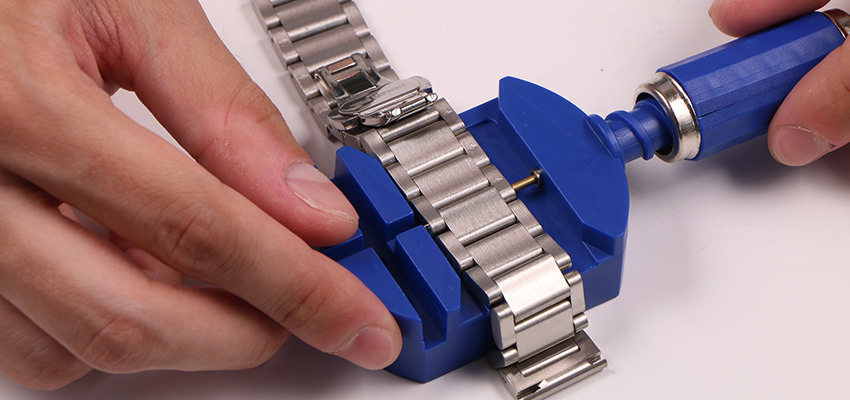
A fine wristwatch is far more than a tool for tracking hours and minutes, it is an extension of personal style, a statement of achievement, and often a deeply cherished heirloom that carries emotional weight. However, even the most mechanically sophisticated or visually stunning timepiece loses its charm and functionality if it does not sit correctly upon the wrist. When a watch is too loose, it slides awkwardly down the forearm, risking damage to the crystal from sudden impacts and making it uncomfortable to wear during daily activities. Conversely, a bracelet that is too tight can constrict blood flow, pinch the skin, and place undue structural stress on the spring bars and clasps, potentially leading to a catastrophic drop. Achieving the ideal balance requires precision, a deep understanding of horological metallurgy, and the right environment, which is why seeking professional assistance for Watch band adjustment and link removal – Altamonte Mall is the most reliable way to ensure your favorite accessory feels like a natural extension of your own body.
When a person purchases a new watch or inherits a vintage piece, the metal bracelet is almost always manufactured to a default maximum length designed to accommodate the largest possible wrist size. This means that for the vast majority of owners, a personalized alteration is an absolute necessity before the watch can be safely and comfortably introduced into their daily rotation. The process of resizing a metal bracelet is a delicate art that goes far beyond simply pounding out metal pins with brute force. Each luxury watch manufacturer utilizes a distinct engineering philosophy when securing the individual links of their bracelets, meaning that a technique used for one brand could easily ruin the mechanism of another. From classic friction pins and split pins to high-end threaded screws and proprietary collar systems, an experienced watchmaker must approach every bracelet with a customized strategy and specialized tools.
The geometry of the human wrist is uniquely complex, as it is rarely a perfect circle but rather an asymmetrical oval that changes shape throughout the day depending on temperature, humidity, and physical activity. A watch that fits beautifully in a cool air-conditioned room might feel uncomfortably restrictive after a short walk in the midday heat, as our blood vessels naturally expand. Professional watch technicians understand these physiological nuances and will often guide the client through an evaluation process to determine exactly how many links need to be extracted. A common mistake made by amateurs attempting to resize their own watches is removing links exclusively from one side of the bracelet, which invariably throws off the center of gravity and causes the watch case to constantly slide toward the outer edge of the wrist.
The intricate mechanics of link removal and preservation
To maintain perfect symmetry and balance, an expert artisan will meticulously evaluate the clasp positioning relative to the watch case, ensuring that the folding mechanism rests flat against the underside of the wrist. This usually involves removing an equal number of links from both the twelve o’clock and six o’clock sides of the bracelet, or occasionally leaving the six o’clock side slightly shorter to counteract the natural tendency of heavy watch heads to tilt away from the wearer. When dealing with high-end luxury timepieces, the pins holding the links together are often tiny, precision-threaded screws that have been secured at the factory with specialized thread-locking compounds to prevent them from backing out due to the natural vibrations of walking. Removing these screws requires a steady hand, the exact matching screwdriver blade width to avoid marring the polished slot, and occasionally a controlled application of localized heat to soften the factory adhesive without damaging the delicate gaskets or movement inside the case.
In other varieties of contemporary bracelets, manufacturers employ a pin and collar system, which is notorious among amateur hobbyists for being exceptionally difficult to manage without losing microscopic components. In this specific configuration, a tiny metal sleeve or collar is nestled inside the central chamber of the link, and a smooth pin is pressed through it to create a high-friction lock. If the technician does not possess the correct alignment blocks and driving punches, the collar can easily be crushed or completely lost, rendering the entire link useless and compromising the structural safety of the watch. A professional workshop ensures that these tiny components are handled with absolute care, using specialized tray systems to keep every microscopic part organized during the alteration process.
Once the appropriate number of links has been carefully extracted and the bracelet has been reassembled, the watchmaker will often utilize the micro-adjustment features hidden within the clasp itself to fine-tune the final fit. Many modern luxury and sports watches feature ingenious sliding micro-adjust mechanisms or spring-loaded extension systems that allow the wearer to quickly expand or contract the bracelet length by a few millimeters without using any tools at all. An experienced technician will always configure the static link removal so that these built-in micro-adjustments sit in a neutral or central position, giving the client maximum flexibility to adjust their watch on the fly as their wrist swells or contracts throughout the changing seasons.
The importance of professional craftsmanship over temporary shortcuts
It can be incredibly tempting for a watch enthusiast to order a cheap tool kit online and attempt to remove links at their own kitchen table, but this path frequently leads to costly regrets and permanent cosmetic damage to the timepiece. The stainless steel, titanium, or precious gold alloys used in fine watchmaking are highly polished surfaces that can easily scratch, gouge, or dent if a tool slips under improper pressure. A single slipped screwdriver can leave a deep, jagged scar across a beautifully brushed satin finish or a mirror-polished link edge, instantly degrading the aesthetic appeal and resale value of a luxury asset. Furthermore, amateur tools often lack the hardening required to manipulate stubborn pins, causing the tools themselves to bend or snap inside the link holes, creating a complex extraction problem that only a master jeweler can resolve.
Beyond the immediate cosmetic risks, improper reassembly poses a massive hidden threat to the safety of the timepiece, as a pin that has not been completely driven home or a screw that lacks the proper torque can slowly work its way out over several weeks of continuous wear. The ultimate nightmare for any watch collector is having a link suddenly separate while they are crossing a hard tile floor or walking down a busy street, causing the watch to plunge onto the pavement below and resulting in a shattered sapphire crystal, a dented case, or a completely broken mechanical movement. Entrusting the job to a dedicated professional ensures that every single pin is perfectly seated, every screw is correctly tensioned, and the integrity of the entire bracelet is thoroughly verified before it ever leaves the workbench.
Furthermore, a professional alteration service always involves returning the extracted links, pins, and screws back to the client in a secure pouch, which is a detail of paramount importance for the long-term stewardship of the timepiece. These spare components should be stored safely inside the original watch box, as they are essential if the watch ever needs to be resized for a future generation, or if the owner decides to sell the piece on the secondary market where a complete bracelet with all original links drastically increases the valuation. Ultimately, spending a few relaxed moments with a qualified watch technician allows you to enjoy your timepiece with complete confidence, knowing that it has been tailored specifically to your unique anatomy with the utmost respect for horological tradition and mechanical precision.